Buy flashscores.eu ?
We are moving the project
flashscores.eu .
Are you interested in purchasing the domain
flashscores.eu ?
domain@kv-gmbh.de · 0541-91531010
Buy flashscores.eu ?
What are intermolecular forces?
Intermolecular forces are the attractive forces that exist between molecules. These forces are responsible for holding molecules together in a liquid or solid state. There are several types of intermolecular forces, including hydrogen bonding, dipole-dipole interactions, and London dispersion forces. These forces play a crucial role in determining the physical properties of substances, such as their boiling and melting points, as well as their solubility and viscosity. **
What intermolecular forces exist?
Intermolecular forces are the forces of attraction and repulsion between molecules. The main types of intermolecular forces include London dispersion forces, dipole-dipole interactions, and hydrogen bonding. London dispersion forces are the weakest type of intermolecular force and occur between all molecules. Dipole-dipole interactions occur between polar molecules, where the positive end of one molecule is attracted to the negative end of another. Hydrogen bonding is a special type of dipole-dipole interaction that occurs when hydrogen is bonded to highly electronegative atoms like oxygen, nitrogen, or fluorine. **
Similar search terms for Intermolecular
Top-Angebote
Products related to Intermolecular:
-
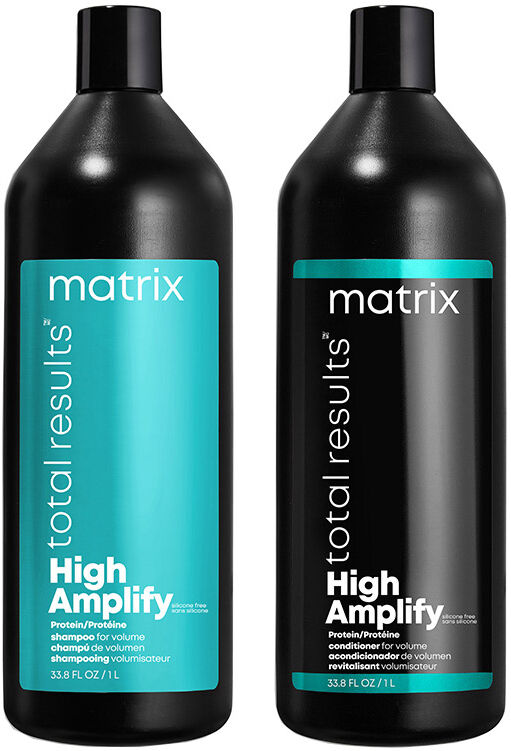
Matrix Total Results High Amplify Shampoo 1000ml & Conditioner 1000mlUniting two fullness-enhancing marvels, this Matrix duo is just the thing to create powerful volume; contains: Total Results High Amplify Shampoo 1000ml Total Results High Amplify Conditioner 1000ml The silicone-free High Amplify Shampoo works to boost the structure of fine, limp hair while effectively freeing it from impurities and excess oil. Specially formulated with proteins to make every strand appear fuller, with added body and bounce. Complementing the superior volumising action of the shampoo, the High Amplify Conditioner gives your locks an instant lift that lasts for a salon-worthy appearance. Please note the packaging is subject to change. Visual shown may vary from actual design. Ingredients Shampoo: Aqua / Water / Eau, Sodium Laureth Sulfate, Citric Acid, Cocamidopropyl Betaine, Glycerin, Sodium Hydroxide, Sodium Chloride, Hexylene Glycol, Parfum / Fragrance, Sodium Benzoate, Salicylic Acid, Polyquaternium-10, Panthenol, Limonene, Hexyl Cinnamal, Alpha-Isomethyl Ionone, Benzyl Alcohol, Hydroxypropyltrimonium Hydrolyzed Wheat Protein, Benzyl Salicylate, Linalool, Benzyl Benzoate, Citronellol, CI 42053 / Green 3, CI 19140 / Yellow 5. Conditioner: Aqua / Water / Eau, Cetearyl Alcohol, Behentrimonium Chloride, Starch Acetate, Cetyl Esters, Phenoxyethanol, Parfum / Fragrance, Isopropyl Alcohol, Hydroxyethylcellulose, Panthenol, Chlorhexidine Digluconate, Hydroxypropyltrimonium Hydrolyzed Wheat Protein, Alpha-Isomethyl Ionone, Hexyl Cinnamal, Linalool, Benzyl Salicylate, Benzyl Alcohol, Limonene, Benzyl Benzoate, Citronellol, CI 42053 / Green 3, CI 47005 / Yellow 10. Gorgeous Shop45,12 £*Shipping: 0,00 £Secure redirect to the provider
-
United Light Bulb Adapter Converter For Lamps And Fixtures Light Bulb Adapter Converter For Lamps And FixturesBrighten your favorite space without replacing the fixture. This E27 to E14 adapter lets you use small screw E14 bulbs in standard E27 lamp holders, making lighting updates quick, simple, and budgetfriendly. Ideal for home lamps, decorative...31,97 $*Shipping: 0,00 $Secure redirect to the provider
-
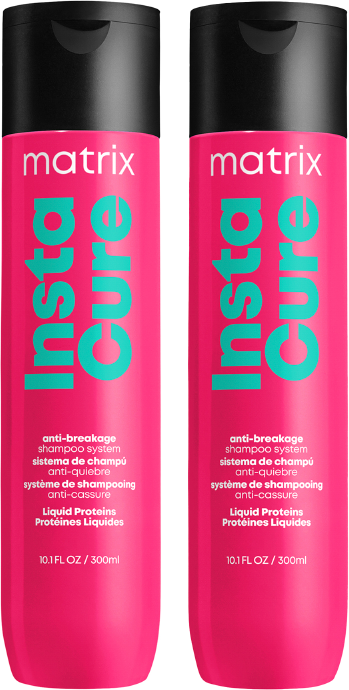
Matrix Total Results InstaCure Anti-Breakage Shampoo for Damaged HairStock-up and save on your favourite shampoo, this handy double pack contains 2 x Matrix Total Results InstaCure Anti-Breakage Shampoo for Damaged Hair 300ml. Infused with Liquid proteins the anti-breakage shampoo repairs hair for strengthened lengths. Hair breakages are reduced improving dry, brittle and damaged hair. Created with an anti-breakage system with a shampoo, conditioner and spray fills porosity, an even and balanced surface is created. Benefits: - Cleanses - Strengthens - Removes buildup Ingredients aqua / water, sodium laureth sulfate, coco-betaine, glycerin, glycol distearate, sodium chloride, propylene glycol, polyquaternium-10, parfum / fragrance, sodium benzoate, sodium hydroxide, citric acid, ppg-5-ceteth-20, carbomer, salicylic acid, hexyl cinnamal, linalool, limonene, hydrolyzed wheat protein, geraniol, hydrolyzed corn protein, hydrolyzed soy protein, citronellol, phenoxyethanol24,64 £*Shipping: 0,00 £Secure redirect to the provider
-
Cornerstone [HARDCOVER] Clear Thinking: Turning Ordinary Moments into Extraordinary ResultsWe all want to see the world clearly. The trouble is, we're never taught how. Join Shane Parrish - 'the former spy who helps Wall Street mavens think smarter' (New York Times) - for a masterclass in the art of clear thinking. Drawing on examples ranging from the evolutionary origins of our 'emotion default' to the secret history of the Challenger disaster, Parrish offers powerful mental models to make sense of any situation. And he reveals a simple, actionable method for smarter decision-making, starting today. Along the way, he shows that the secret to mental clarity lies not in how we approach the most high-stakes moments - but in our tiniest, most everyday decisions. It's a simple idea with startling implications: if you clear your head today, you change your life tomorrow.12,89 £*Shipping: 2,99 £Secure redirect to the provider

![Cornerstone [HARDCOVER] Clear Thinking: Turning Ordinary Moments into Extraordinary Results](https://cdn.adindex.com/oimg/7e612691-51e7-4556-9666-2890015b6835)
-
What are intermolecular interactions?
Intermolecular interactions are the forces of attraction or repulsion between molecules. These interactions play a crucial role in determining the physical and chemical properties of substances. Examples of intermolecular interactions include hydrogen bonding, van der Waals forces, and dipole-dipole interactions. These forces can affect properties such as boiling and melting points, solubility, and viscosity. **
-
Which intermolecular interactions are possible?
Intermolecular interactions that are possible include hydrogen bonding, dipole-dipole interactions, and London dispersion forces. Hydrogen bonding occurs when a hydrogen atom is bonded to a highly electronegative atom such as oxygen, nitrogen, or fluorine. Dipole-dipole interactions occur between molecules with permanent dipoles, while London dispersion forces are the weakest intermolecular interactions and occur between all molecules due to temporary fluctuations in electron distribution. These interactions play a crucial role in determining the physical properties of substances such as boiling and melting points. **
-
How are intermolecular forces classified?
Intermolecular forces are classified into three main categories: dispersion forces, dipole-dipole forces, and hydrogen bonding. Dispersion forces are the weakest type of intermolecular force and are caused by temporary fluctuations in electron distribution within molecules. Dipole-dipole forces occur between polar molecules and are stronger than dispersion forces. Hydrogen bonding is the strongest type of intermolecular force and occurs when hydrogen is bonded to highly electronegative atoms like oxygen, nitrogen, or fluorine. **
-
What are strong intermolecular interactions?
Strong intermolecular interactions are attractive forces between molecules that are stronger than typical van der Waals forces. These interactions can include hydrogen bonding, dipole-dipole interactions, and ion-dipole interactions. Strong intermolecular interactions play a crucial role in determining the physical properties of substances such as boiling point, melting point, and solubility. They are important in various biological processes, such as protein folding and DNA replication. **


Which intermolecular forces are the strongest?
The strongest intermolecular forces are hydrogen bonding, which occurs when a hydrogen atom is bonded to a highly electronegative atom such as oxygen, nitrogen, or fluorine. Hydrogen bonding is stronger than dipole-dipole interactions and London dispersion forces. This is because hydrogen bonding involves a particularly strong attraction between the partially positive hydrogen atom and the partially negative atom it is bonded to, leading to a higher energy of interaction compared to other intermolecular forces. **
What are intermolecular interactions in chemistry?
Intermolecular interactions are the forces of attraction or repulsion between molecules. These interactions play a crucial role in determining the physical properties of substances, such as boiling point, melting point, and solubility. The main types of intermolecular interactions include hydrogen bonding, dipole-dipole interactions, and van der Waals forces. These interactions are weaker than chemical bonds within a molecule, but they still significantly impact the behavior and properties of substances. **
Top-Angebote
Products related to Intermolecular:
-
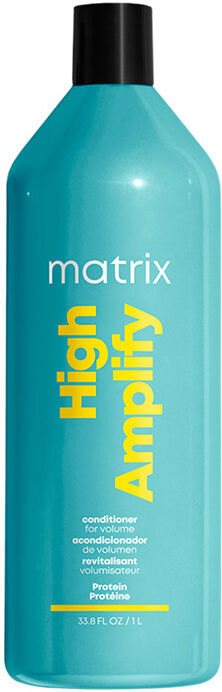
Matrix Total Results High Amplify Conditioner 1000mlThis fullness-restoring conditioner delivers glorious, salon-worthy body and volume to fine, flat hair. Specially formulated with proteins - and free of silicones – this Matrix High Amplify hero gives your locks an instant lift that lasts. Please note the packaging is subject to change. Visual shown may vary from actual design. Ingredients Aqua / Water / Eau, Cetearyl Alcohol, Behentrimonium Chloride, Starch Acetate, Cetyl Esters, Phenoxyethanol, Parfum / Fragrance, Isopropyl Alcohol, Hydroxyethylcellulose, Panthenol, Chlorhexidine Digluconate, Hydroxypropyltrimonium Hydrolyzed Wheat Protein, Alpha-Isomethyl Ionone, Hexyl Cinnamal, Linalool, Benzyl Salicylate, Benzyl Alcohol, Limonene, Benzyl Benzoate, Citronellol, CI 42053 / Green 3, CI 47005 / Yellow 10.23,97 £*Shipping: 0,00 £Secure redirect to the provider
-
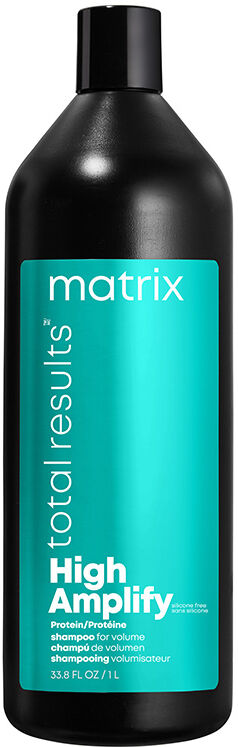
Matrix Total Results High Amplify Shampoo 1000mlThe secret to amplifying volume, this Matrix Total Results marvel works to boost the structure of fine, limp hair while effectively freeing it from impurities and excess oil. Specially formulated with proteins, this high-performance strengthening shampoo makes every strand appear fuller, with added body and bounce. Free of silicones. Please note the packaging is subject to change. Visual shown may vary from actual design. Ingredients Aqua / Water / Eau, Sodium Laureth Sulfate, Citric Acid, Cocamidopropyl Betaine, Glycerin, Sodium Hydroxide, Sodium Chloride, Hexylene Glycol, Parfum / Fragrance, Sodium Benzoate, Salicylic Acid, Polyquaternium-10, Panthenol, Limonene, Hexyl Cinnamal, Alpha-Isomethyl Ionone, Benzyl Alcohol, Hydroxypropyltrimonium Hydrolyzed Wheat Protein, Benzyl Salicylate, Linalool, Benzyl Benzoate, Citronellol, CI 42053 / Green 3, CI 19140 / Yellow 5. Gorgeous Shop23,97 £*Shipping: 0,00 £Secure redirect to the provider
-
Matrix Total Results High Amplify Shampoo 1000ml & Conditioner 1000mlUniting two fullness-enhancing marvels, this Matrix duo is just the thing to create powerful volume; contains: Total Results High Amplify Shampoo 1000ml Total Results High Amplify Conditioner 1000ml The silicone-free High Amplify Shampoo works to boost the structure of fine, limp hair while effectively freeing it from impurities and excess oil. Specially formulated with proteins to make every strand appear fuller, with added body and bounce. Complementing the superior volumising action of the shampoo, the High Amplify Conditioner gives your locks an instant lift that lasts for a salon-worthy appearance. Please note the packaging is subject to change. Visual shown may vary from actual design. Ingredients Shampoo: Aqua / Water / Eau, Sodium Laureth Sulfate, Citric Acid, Cocamidopropyl Betaine, Glycerin, Sodium Hydroxide, Sodium Chloride, Hexylene Glycol, Parfum / Fragrance, Sodium Benzoate, Salicylic Acid, Polyquaternium-10, Panthenol, Limonene, Hexyl Cinnamal, Alpha-Isomethyl Ionone, Benzyl Alcohol, Hydroxypropyltrimonium Hydrolyzed Wheat Protein, Benzyl Salicylate, Linalool, Benzyl Benzoate, Citronellol, CI 42053 / Green 3, CI 19140 / Yellow 5. Conditioner: Aqua / Water / Eau, Cetearyl Alcohol, Behentrimonium Chloride, Starch Acetate, Cetyl Esters, Phenoxyethanol, Parfum / Fragrance, Isopropyl Alcohol, Hydroxyethylcellulose, Panthenol, Chlorhexidine Digluconate, Hydroxypropyltrimonium Hydrolyzed Wheat Protein, Alpha-Isomethyl Ionone, Hexyl Cinnamal, Linalool, Benzyl Salicylate, Benzyl Alcohol, Limonene, Benzyl Benzoate, Citronellol, CI 42053 / Green 3, CI 47005 / Yellow 10. Gorgeous Shop45,12 £*Shipping: 0,00 £Secure redirect to the provider
-
United Light Bulb Adapter Converter For Lamps And Fixtures Light Bulb Adapter Converter For Lamps And FixturesBrighten your favorite space without replacing the fixture. This E27 to E14 adapter lets you use small screw E14 bulbs in standard E27 lamp holders, making lighting updates quick, simple, and budgetfriendly. Ideal for home lamps, decorative...31,97 $*Shipping: 0,00 $Secure redirect to the provider
-
What are intermolecular forces?
Intermolecular forces are the attractive forces that exist between molecules. These forces are responsible for holding molecules together in a liquid or solid state. There are several types of intermolecular forces, including hydrogen bonding, dipole-dipole interactions, and London dispersion forces. These forces play a crucial role in determining the physical properties of substances, such as their boiling and melting points, as well as their solubility and viscosity. **
-
What intermolecular forces exist?
Intermolecular forces are the forces of attraction and repulsion between molecules. The main types of intermolecular forces include London dispersion forces, dipole-dipole interactions, and hydrogen bonding. London dispersion forces are the weakest type of intermolecular force and occur between all molecules. Dipole-dipole interactions occur between polar molecules, where the positive end of one molecule is attracted to the negative end of another. Hydrogen bonding is a special type of dipole-dipole interaction that occurs when hydrogen is bonded to highly electronegative atoms like oxygen, nitrogen, or fluorine. **
-
What are intermolecular interactions?
Intermolecular interactions are the forces of attraction or repulsion between molecules. These interactions play a crucial role in determining the physical and chemical properties of substances. Examples of intermolecular interactions include hydrogen bonding, van der Waals forces, and dipole-dipole interactions. These forces can affect properties such as boiling and melting points, solubility, and viscosity. **
-
Which intermolecular interactions are possible?
Intermolecular interactions that are possible include hydrogen bonding, dipole-dipole interactions, and London dispersion forces. Hydrogen bonding occurs when a hydrogen atom is bonded to a highly electronegative atom such as oxygen, nitrogen, or fluorine. Dipole-dipole interactions occur between molecules with permanent dipoles, while London dispersion forces are the weakest intermolecular interactions and occur between all molecules due to temporary fluctuations in electron distribution. These interactions play a crucial role in determining the physical properties of substances such as boiling and melting points. **
Similar search terms for Intermolecular
-
Matrix Total Results InstaCure Anti-Breakage Shampoo for Damaged HairStock-up and save on your favourite shampoo, this handy double pack contains 2 x Matrix Total Results InstaCure Anti-Breakage Shampoo for Damaged Hair 300ml. Infused with Liquid proteins the anti-breakage shampoo repairs hair for strengthened lengths. Hair breakages are reduced improving dry, brittle and damaged hair. Created with an anti-breakage system with a shampoo, conditioner and spray fills porosity, an even and balanced surface is created. Benefits: - Cleanses - Strengthens - Removes buildup Ingredients aqua / water, sodium laureth sulfate, coco-betaine, glycerin, glycol distearate, sodium chloride, propylene glycol, polyquaternium-10, parfum / fragrance, sodium benzoate, sodium hydroxide, citric acid, ppg-5-ceteth-20, carbomer, salicylic acid, hexyl cinnamal, linalool, limonene, hydrolyzed wheat protein, geraniol, hydrolyzed corn protein, hydrolyzed soy protein, citronellol, phenoxyethanol24,64 £*Shipping: 0,00 £Secure redirect to the provider
-
Cornerstone [HARDCOVER] Clear Thinking: Turning Ordinary Moments into Extraordinary ResultsWe all want to see the world clearly. The trouble is, we're never taught how. Join Shane Parrish - 'the former spy who helps Wall Street mavens think smarter' (New York Times) - for a masterclass in the art of clear thinking. Drawing on examples ranging from the evolutionary origins of our 'emotion default' to the secret history of the Challenger disaster, Parrish offers powerful mental models to make sense of any situation. And he reveals a simple, actionable method for smarter decision-making, starting today. Along the way, he shows that the secret to mental clarity lies not in how we approach the most high-stakes moments - but in our tiniest, most everyday decisions. It's a simple idea with startling implications: if you clear your head today, you change your life tomorrow.12,89 £*Shipping: 2,99 £Secure redirect to the provider
-
Matrix Total Results InstaCure Anti-Breakage Porosity Filler Spray forStock up and save on nourished locks with this double pack of Total Results InstaCure Anti-Breakage Porosity Filler Spray for Damaged Hair in 190ml! Perfect for dry, brittle and damaged hair, this anti-breakage spray has been Infused with B5 and Liquid Protein to repair and nourish hair in need of TLC. The light-weight formula smooths cuticle damage, controls static and frizz, conditions over-porous hair, protects hair from heat styling, and works on sensitive and vulnerable hair to balance pH. Anti-Breakage System of shampoo, conditioner and spray fills porosity, creating an even and balanced surface. Key Benefits: - Controls static and frizz - Conditions over-porous hair - Protects hair from heat styling, - Works on sensitive and vulnerable hair to balance pH - Spray fills porosity, creating an even and balanced surface Ingredients: aqua / water, sodium laureth sulfate, coco-betaine, glycerin, glycol distearate, sodium chloride, propylene glycol, polyquaternium-10, parfum / fragrance, sodium benzoate, sodium hydroxide, citric acid, ppg-5-ceteth-20, carbomer, salicylic acid, hexyl cinnamal, linalool, limonene, hydrolyzed wheat protein, geraniol, hydrolyzed corn protein, hydrolyzed soy protein, citronellol, phenoxyethanol30,72 £*Shipping: 0,00 £Secure redirect to the provider
-
How are intermolecular forces classified?
Intermolecular forces are classified into three main categories: dispersion forces, dipole-dipole forces, and hydrogen bonding. Dispersion forces are the weakest type of intermolecular force and are caused by temporary fluctuations in electron distribution within molecules. Dipole-dipole forces occur between polar molecules and are stronger than dispersion forces. Hydrogen bonding is the strongest type of intermolecular force and occurs when hydrogen is bonded to highly electronegative atoms like oxygen, nitrogen, or fluorine. **
-
What are strong intermolecular interactions?
Strong intermolecular interactions are attractive forces between molecules that are stronger than typical van der Waals forces. These interactions can include hydrogen bonding, dipole-dipole interactions, and ion-dipole interactions. Strong intermolecular interactions play a crucial role in determining the physical properties of substances such as boiling point, melting point, and solubility. They are important in various biological processes, such as protein folding and DNA replication. **
-
Which intermolecular forces are the strongest?
The strongest intermolecular forces are hydrogen bonding, which occurs when a hydrogen atom is bonded to a highly electronegative atom such as oxygen, nitrogen, or fluorine. Hydrogen bonding is stronger than dipole-dipole interactions and London dispersion forces. This is because hydrogen bonding involves a particularly strong attraction between the partially positive hydrogen atom and the partially negative atom it is bonded to, leading to a higher energy of interaction compared to other intermolecular forces. **
-
What are intermolecular interactions in chemistry?
Intermolecular interactions are the forces of attraction or repulsion between molecules. These interactions play a crucial role in determining the physical properties of substances, such as boiling point, melting point, and solubility. The main types of intermolecular interactions include hydrogen bonding, dipole-dipole interactions, and van der Waals forces. These interactions are weaker than chemical bonds within a molecule, but they still significantly impact the behavior and properties of substances. **
* All prices are inclusive of VAT and, if applicable, plus shipping costs. The offer information is based on the details provided by the respective shop and is updated through automated processes. Real-time updates do not occur, so deviations can occur in individual cases. ** Note: Parts of this content were created by AI.