Buy flashscores.eu ?
We are moving the project
flashscores.eu .
Are you interested in purchasing the domain
flashscores.eu ?
domain@kv-gmbh.de · 0541-91531010
Buy flashscores.eu ?
What is the definition of a random variable in statistics?
In statistics, a random variable is a variable whose possible values are outcomes of a random phenomenon. It represents a numerical outcome of a random experiment, where the value of the variable is not known with certainty. Random variables can be discrete, taking on a finite number of values, or continuous, taking on any value within a range. They are a fundamental concept in probability theory and are used to model uncertainty in various statistical analyses. **
What is the proof for a random variable in statistics?
The proof for a random variable in statistics is typically based on the axioms of probability theory. A random variable is a function that assigns a real number to each outcome of a random experiment. The proof for a random variable involves showing that it satisfies the properties of a probability measure, such as non-negativity, additivity, and total probability. Additionally, the proof may involve demonstrating that the random variable has a cumulative distribution function that meets the requirements of a valid probability distribution. Overall, the proof for a random variable involves establishing that it accurately represents the uncertainty associated with a random experiment. **

Similar search terms for Variable
Top-Angebote
Products related to Variable:
-
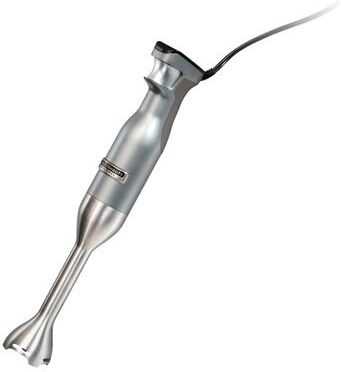
Hamilton Beach Professional Variable Speed Hand BlenderWith the versatile Hamilton Beach® Professional Variable Speed Hand Blender, you can puree soups, blend smoothies, mix dressings, or whip cream right in your pan, bowl, or jar. This not only saves you time, it eliminates the need to clean extra dishes.89,45 $*Shipping: 0,00 $Secure redirect to the provider
-
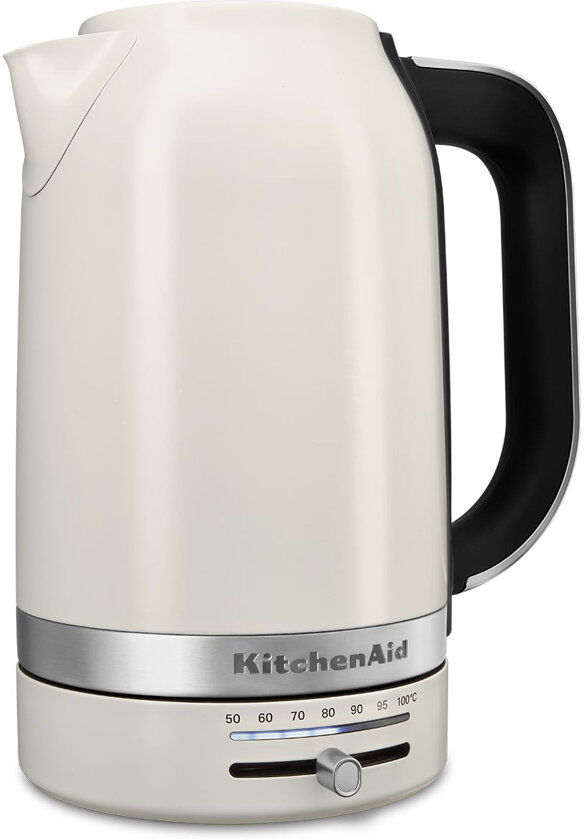
KitchenAid Variable Temperature Kettle 1.7L Pistachio 1.7LThe 1.7 L variable temperature kettle quickly and quietly boils water to the temperature of your choice. Automatic heating technology takes care of boiling your water and automatically shuts off after boiling is complete. ?Its generous size means you can heat water for multiple servings of tea, coffee, cereals and more. It's convenient to fill at the tap with its lid-release button, and you can check the water window to clearly see the water level. A nice chime lets you know when your water has reached the desired temperature for your brew. There's a removable and washable limescale filter that helps to reduce the presence of limescale and a neat cord wrap in the base prevents any excess cord from cluttering up your countertop. KitchenAid Colour: Pistachio133,95 £*Shipping: 0,00 £Secure redirect to the provider
-
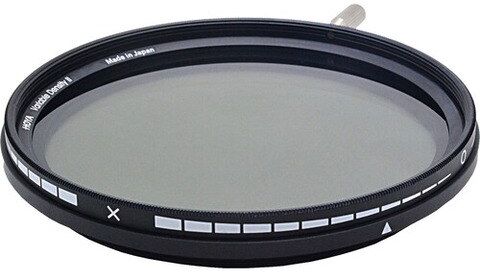
Hoya Variable Density II ND3-ND400 Filter 67mmThe Hoya Variable Density II is a 67mm screw-in variable neutral density filter. Rotating the outer ring sets the density anywhere from ND3 to ND400 (about 1.5 to 9 stops), so one filter replaces a set of fixed ND filters for long exposures, motion blur or shooting wide open in bright light.Compared with the original Variable Density filter, the Mark II frame is thinner to reduce vignetting on wide-angle lenses. The front of the frame is one size larger than the thread, so it takes a 72mm lens cap rather than a 67mm one. Turning the ring past either end of the range produces a cross-shaped (X) pattern.131,49 £*Shipping: 0,00 £Secure redirect to the provider
-
Hoya Variable Density II ND3-ND400 Filter 72mmThe Hoya Variable Density II is a 72mm screw-in variable neutral density filter. Rotating the outer ring sets the density anywhere from ND3 to ND400 (about 1.5 to 9 stops), so one filter replaces a set of fixed ND filters for long exposures, motion blur or shooting wide open in bright light.Compared with the original Variable Density filter, the Mark II frame is thinner to reduce vignetting on wide-angle lenses. The front of the frame is one size larger than the thread, so it takes a 77mm lens cap rather than a 72mm one. Turning the ring past either end of the range produces a cross-shaped (X) pattern.140,99 £*Shipping: 0,00 £Secure redirect to the provider

-
What is a binomial distributed random variable in probability and statistics?
A binomial distributed random variable in probability and statistics is a discrete random variable that represents the number of successes in a fixed number of independent Bernoulli trials. Each trial has only two possible outcomes, typically labeled as success and failure, and the probability of success remains constant from trial to trial. The binomial distribution is characterized by two parameters: the number of trials (n) and the probability of success (p). The probability mass function of a binomial distributed random variable gives the probability of obtaining a specific number of successes in the given number of trials. **
-
What is a variable and non-variable quantity?
A variable quantity is a quantity that can change or vary, such as the temperature, time, or the price of a product. These quantities can take on different values and are often represented by symbols or letters in mathematical equations. On the other hand, a non-variable quantity is a quantity that remains constant and does not change, such as the speed of light or the number of sides in a triangle. Non-variable quantities are fixed and do not depend on any other factors. **
-
What is the difference between variable definition and variable initialization?
Variable definition is the process of declaring a variable and specifying its data type, such as int, float, or string. This tells the compiler or interpreter that a variable with a certain name and data type will be used in the program. Variable initialization, on the other hand, is the process of assigning a value to the variable for the first time. This can happen at the same time as the variable is defined, or at a later point in the program. Initialization gives the variable a specific value to work with, while definition simply sets up the variable's characteristics. **
-
What is a question about quantiles with a continuous random variable in statistics?
A question about quantiles with a continuous random variable in statistics could be: "What is the value of the 75th percentile for a normal distribution with a mean of 50 and a standard deviation of 10?" This question involves finding the value at which 75% of the data falls below when the data is normally distributed with the given parameters. The 75th percentile is a specific quantile that divides the data into the lower 75% and the upper 25%. **


How can a JavaScript variable be transferred to a PHP variable?
A JavaScript variable can be transferred to a PHP variable by using AJAX (Asynchronous JavaScript and XML) to send the variable value to a PHP script on the server. The PHP script can then receive the variable value using the $_POST or $_GET superglobals, and assign it to a PHP variable. Another way to transfer a JavaScript variable to a PHP variable is by embedding the JavaScript variable value in a form and submitting the form to a PHP script, which can then retrieve the value using the $_POST or $_GET superglobals. **
'How do I write a variable in a variable in Arduino?'
In Arduino, you can write a variable in a variable by using the concept of pointers. You can declare a pointer variable and then assign the address of the original variable to the pointer variable. This allows you to indirectly access the original variable through the pointer variable. Here's an example of how to write a variable in a variable in Arduino: ```C int originalVariable = 10; int *pointerVariable = &originalVariable; // Assign the address of originalVariable to pointerVariable *pointerVariable = 20; // Write a new value to originalVariable through pointerVariable ``` In this example, the value of originalVariable is changed to 20 by writing to it through the pointerVariable. **
Top-Angebote
Products related to Variable:
-
Smeg Variable Temperature Kettle KLF0450's Retro Style Aesthetic Variable 3D Logo Temperature Kettle with Stainless steel body material powder coated. Features include Electronic temperature control, 7 temperature levels and Keep Warm function.259,95 $*Shipping: 0,00 $Secure redirect to the provider
-
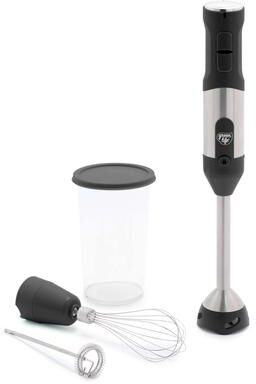
GreenLife Electric Variable Speed Hand BlenderGet three different appliances all in one with this handy stick blender. Designed to save drawer and counter-space, this hard-working hand blender comes with three removable attachments so you can blend, froth, and whisk faster and easier!47,99 $*Shipping: 0,00 $Secure redirect to the provider
-
Hamilton Beach Professional Variable Speed Hand BlenderWith the versatile Hamilton Beach® Professional Variable Speed Hand Blender, you can puree soups, blend smoothies, mix dressings, or whip cream right in your pan, bowl, or jar. This not only saves you time, it eliminates the need to clean extra dishes.89,45 $*Shipping: 0,00 $Secure redirect to the provider
-
KitchenAid Variable Temperature Kettle 1.7L Pistachio 1.7LThe 1.7 L variable temperature kettle quickly and quietly boils water to the temperature of your choice. Automatic heating technology takes care of boiling your water and automatically shuts off after boiling is complete. ?Its generous size means you can heat water for multiple servings of tea, coffee, cereals and more. It's convenient to fill at the tap with its lid-release button, and you can check the water window to clearly see the water level. A nice chime lets you know when your water has reached the desired temperature for your brew. There's a removable and washable limescale filter that helps to reduce the presence of limescale and a neat cord wrap in the base prevents any excess cord from cluttering up your countertop. KitchenAid Colour: Pistachio133,95 £*Shipping: 0,00 £Secure redirect to the provider
-
What is the definition of a random variable in statistics?
In statistics, a random variable is a variable whose possible values are outcomes of a random phenomenon. It represents a numerical outcome of a random experiment, where the value of the variable is not known with certainty. Random variables can be discrete, taking on a finite number of values, or continuous, taking on any value within a range. They are a fundamental concept in probability theory and are used to model uncertainty in various statistical analyses. **
-
What is the proof for a random variable in statistics?
The proof for a random variable in statistics is typically based on the axioms of probability theory. A random variable is a function that assigns a real number to each outcome of a random experiment. The proof for a random variable involves showing that it satisfies the properties of a probability measure, such as non-negativity, additivity, and total probability. Additionally, the proof may involve demonstrating that the random variable has a cumulative distribution function that meets the requirements of a valid probability distribution. Overall, the proof for a random variable involves establishing that it accurately represents the uncertainty associated with a random experiment. **
-
What is a binomial distributed random variable in probability and statistics?
A binomial distributed random variable in probability and statistics is a discrete random variable that represents the number of successes in a fixed number of independent Bernoulli trials. Each trial has only two possible outcomes, typically labeled as success and failure, and the probability of success remains constant from trial to trial. The binomial distribution is characterized by two parameters: the number of trials (n) and the probability of success (p). The probability mass function of a binomial distributed random variable gives the probability of obtaining a specific number of successes in the given number of trials. **
-
What is a variable and non-variable quantity?
A variable quantity is a quantity that can change or vary, such as the temperature, time, or the price of a product. These quantities can take on different values and are often represented by symbols or letters in mathematical equations. On the other hand, a non-variable quantity is a quantity that remains constant and does not change, such as the speed of light or the number of sides in a triangle. Non-variable quantities are fixed and do not depend on any other factors. **
Similar search terms for Variable
-
Hoya Variable Density II ND3-ND400 Filter 67mmThe Hoya Variable Density II is a 67mm screw-in variable neutral density filter. Rotating the outer ring sets the density anywhere from ND3 to ND400 (about 1.5 to 9 stops), so one filter replaces a set of fixed ND filters for long exposures, motion blur or shooting wide open in bright light.Compared with the original Variable Density filter, the Mark II frame is thinner to reduce vignetting on wide-angle lenses. The front of the frame is one size larger than the thread, so it takes a 72mm lens cap rather than a 67mm one. Turning the ring past either end of the range produces a cross-shaped (X) pattern.131,49 £*Shipping: 0,00 £Secure redirect to the provider
-
Hoya Variable Density II ND3-ND400 Filter 72mmThe Hoya Variable Density II is a 72mm screw-in variable neutral density filter. Rotating the outer ring sets the density anywhere from ND3 to ND400 (about 1.5 to 9 stops), so one filter replaces a set of fixed ND filters for long exposures, motion blur or shooting wide open in bright light.Compared with the original Variable Density filter, the Mark II frame is thinner to reduce vignetting on wide-angle lenses. The front of the frame is one size larger than the thread, so it takes a 77mm lens cap rather than a 72mm one. Turning the ring past either end of the range produces a cross-shaped (X) pattern.140,99 £*Shipping: 0,00 £Secure redirect to the provider
-
Hoya Variable Density II ND3-ND400 Filter 77mmThe Hoya Variable Density II is a 77mm screw-in variable neutral density filter. Rotating the outer ring sets the density anywhere from ND3 to ND400 (about 1.5 to 9 stops), so one filter replaces a set of fixed ND filters for long exposures, motion blur or shooting wide open in bright light.Compared with the original Variable Density filter, the Mark II frame is thinner to reduce vignetting on wide-angle lenses. The front of the frame is one size larger than the thread, so it takes a 82mm lens cap rather than a 77mm one. Turning the ring past either end of the range produces a cross-shaped (X) pattern.149,99 £*Shipping: 0,00 £Secure redirect to the provider
-
Hoya Variable Density II ND3-ND400 Filter 82mmThe Hoya Variable Density II is a 82mm screw-in variable neutral density filter. Rotating the outer ring sets the density anywhere from ND3 to ND400 (about 1.5 to 9 stops), so one filter replaces a set of fixed ND filters for long exposures, motion blur or shooting wide open in bright light.Compared with the original Variable Density filter, the Mark II frame is thinner to reduce vignetting on wide-angle lenses. The front of the frame is one size larger than the thread, so it takes a 86mm lens cap rather than a 82mm one. Turning the ring past either end of the range produces a cross-shaped (X) pattern.164,99 £*Shipping: 0,00 £Secure redirect to the provider
-
What is the difference between variable definition and variable initialization?
Variable definition is the process of declaring a variable and specifying its data type, such as int, float, or string. This tells the compiler or interpreter that a variable with a certain name and data type will be used in the program. Variable initialization, on the other hand, is the process of assigning a value to the variable for the first time. This can happen at the same time as the variable is defined, or at a later point in the program. Initialization gives the variable a specific value to work with, while definition simply sets up the variable's characteristics. **
-
What is a question about quantiles with a continuous random variable in statistics?
A question about quantiles with a continuous random variable in statistics could be: "What is the value of the 75th percentile for a normal distribution with a mean of 50 and a standard deviation of 10?" This question involves finding the value at which 75% of the data falls below when the data is normally distributed with the given parameters. The 75th percentile is a specific quantile that divides the data into the lower 75% and the upper 25%. **
-
How can a JavaScript variable be transferred to a PHP variable?
A JavaScript variable can be transferred to a PHP variable by using AJAX (Asynchronous JavaScript and XML) to send the variable value to a PHP script on the server. The PHP script can then receive the variable value using the $_POST or $_GET superglobals, and assign it to a PHP variable. Another way to transfer a JavaScript variable to a PHP variable is by embedding the JavaScript variable value in a form and submitting the form to a PHP script, which can then retrieve the value using the $_POST or $_GET superglobals. **
-
'How do I write a variable in a variable in Arduino?'
In Arduino, you can write a variable in a variable by using the concept of pointers. You can declare a pointer variable and then assign the address of the original variable to the pointer variable. This allows you to indirectly access the original variable through the pointer variable. Here's an example of how to write a variable in a variable in Arduino: ```C int originalVariable = 10; int *pointerVariable = &originalVariable; // Assign the address of originalVariable to pointerVariable *pointerVariable = 20; // Write a new value to originalVariable through pointerVariable ``` In this example, the value of originalVariable is changed to 20 by writing to it through the pointerVariable. **
* All prices are inclusive of VAT and, if applicable, plus shipping costs. The offer information is based on the details provided by the respective shop and is updated through automated processes. Real-time updates do not occur, so deviations can occur in individual cases. ** Note: Parts of this content were created by AI.